Patient-specific implants and surgical guides, designed from your patient's CT.
Vimics is a veterinary orthopaedic technology company developing patient-specific orthopaedic implants, surgical guides and digital surgical planning solutions for animals.


- Input
- CT as DICOM
- Patients
- Dogs and cats
- Implants
- Ti6Al4V, Additive Manufacturing
- Guides
- Biocompatible, autoclavable resin
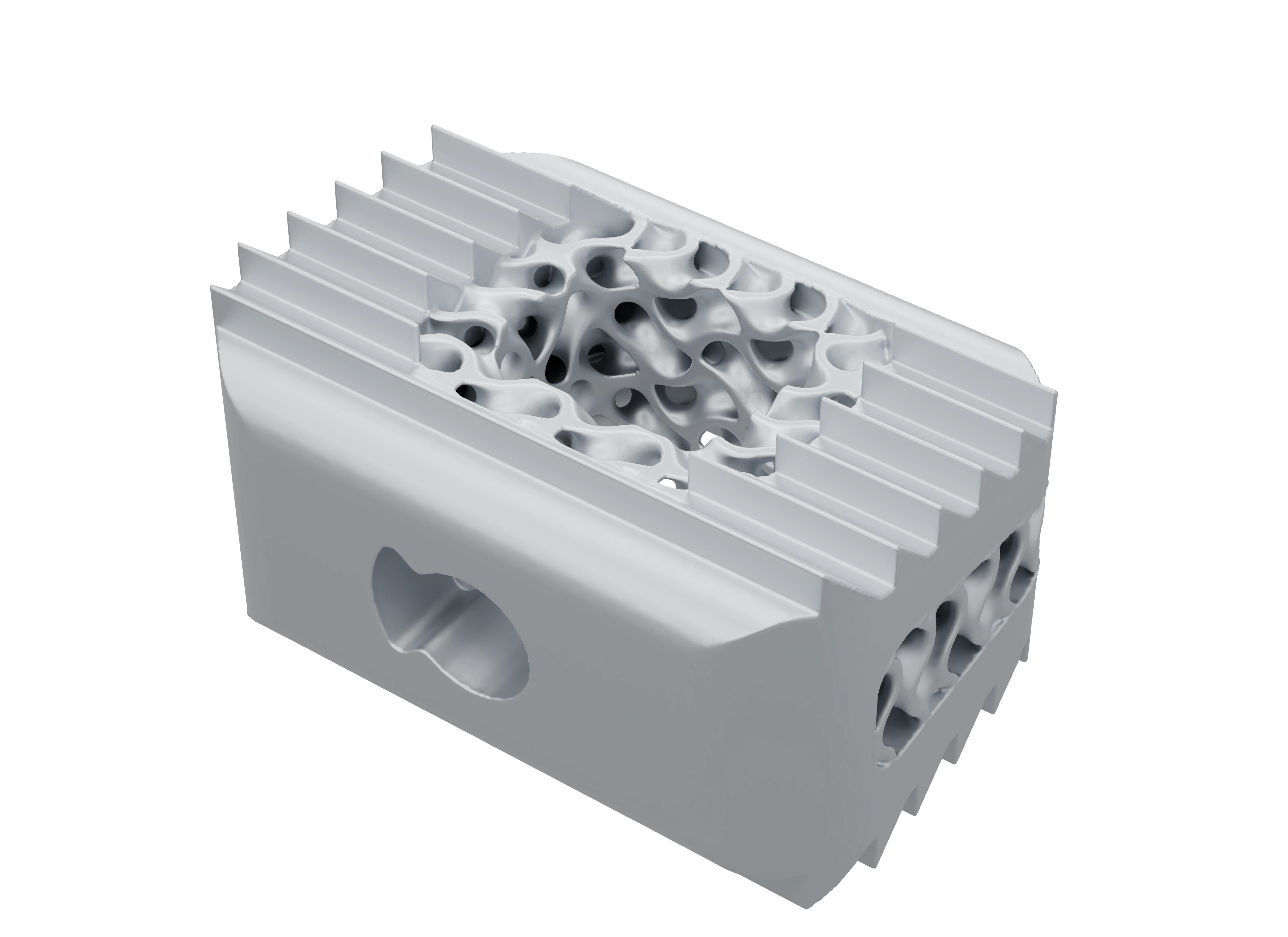
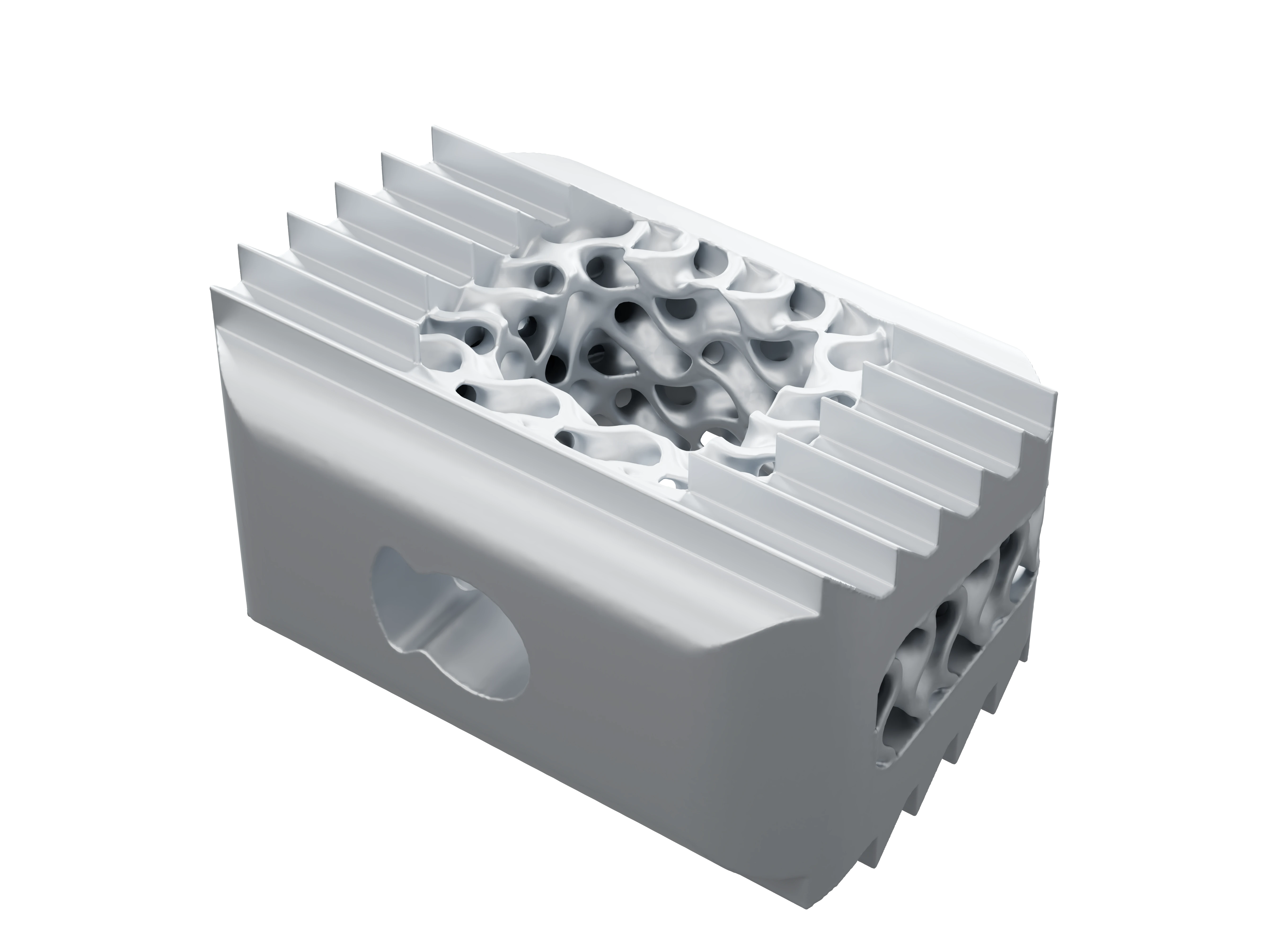
ViCage interbody fusion cage set
Ten sizes in one set: five footprints, two heights each. Gyroid lattice core in Ti6Al4V ELI, produced by Additive Manufacturing.
What we make
Each item starts from the patient's own CT data. Planning, design and production run case by case.
Planning and models
AvailableVirtual surgical planning
DICOM to 3D. Digital simulation of osteotomy and resection angles before surgery.
Corrective osteotomy · tumour resectionAnatomical planning model
Sterilisable, true-to-size replica of the patient's anatomy. Used as a pre-operative bending template.
Complex surgical casesVeterinary education model
Replicas of pathological bone for veterinary faculties and surgical training centres.
Training · simulation
Surgical guides
AvailablePedicle screw guide
Patient-specific drill guide for cervical and thoracolumbar pedicle screws.
Wobbler syndrome · vertebral fracture fixation · lumbosacral instabilityCorrective osteotomy guide
Cutting and drilling guide that transfers virtually planned osteotomy angles in angular limb deformities.
Antebrachial deformity · malunionTumour resection guide
Cutting guide that carries the resection margin planned on CT into the operating field.
Osteosarcoma · chondrosarcoma · MLO
Patient-specific implants
AvailableVertebral cage and interbody fusion
Patient-specific plate and interbody fusion cage for atlanto-axial, cervical and thoracolumbar stabilisation.
Wobbler syndrome · atlanto-axial subluxation · vertebral fractureCaged plate for limb salvage
Reconstruction of a segmental bone defect after tumour resection, with a lattice cage built into the plate.
Distal radius OSA · proximal humerus OSA · distal tibial tumoursMandibular reconstruction plate
Patient-specific titanium plate for reconstructing the mandible after mandibulectomy.
Mandibular SCC (cats) · MLO, OSA (dogs) · traumatic defectsPalatal obturator
Patient-specific obturator produced in bio-resin for palatal defects.
Congenital cleft palate · oronasal fistula
Implant sets
NewViCage
Interbody fusion cage set with a gyroid lattice core. Ten sizes from 4.5 to 7.5 mm, with a keyed inserter.
Ti6Al4V ELI · Additive Manufacturing
In development
Coming soonITAP
Intraosseous transcutaneous amputation prosthesis: an osseointegrated implant with a connection for an external prosthesis.
Pelvic or thoracic limb amputation, especially in catsTTA Cage
Titanium cage that holds the tibial tuberosity advancement distance set by the corrective angle.
Cranial cruciate ligament deficiency
How a case runs
- 01
CT data
You send the patient's CT as a DICOM series.
- 02
3D planning
We segment the anatomy and plan trajectories, cuts or implant fit on the 3D model.
- 03
Design and production
The guide or implant is designed on the plan and produced by Additive Manufacturing.
- 04
Surgery
You receive the guide or implant for the planned procedure.
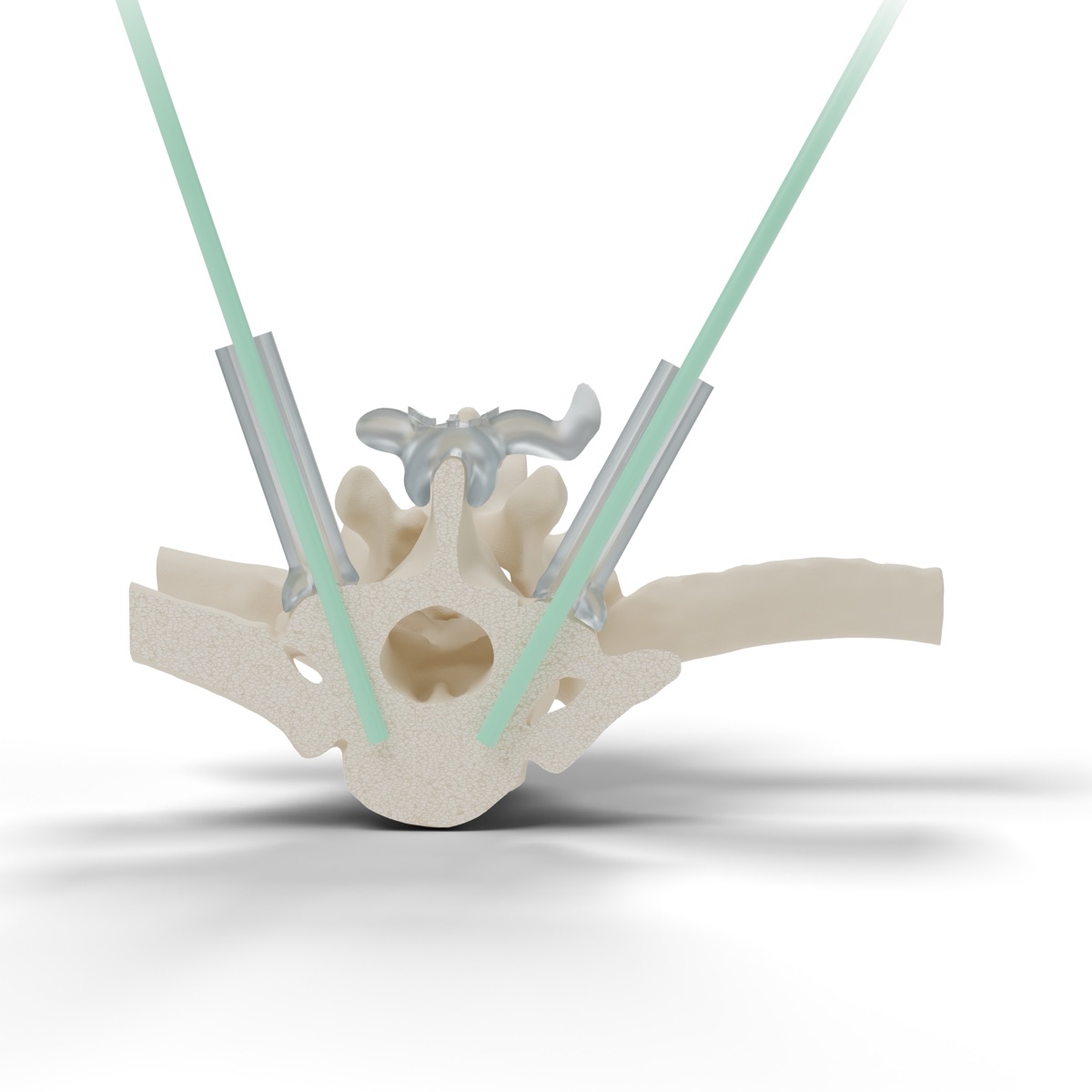
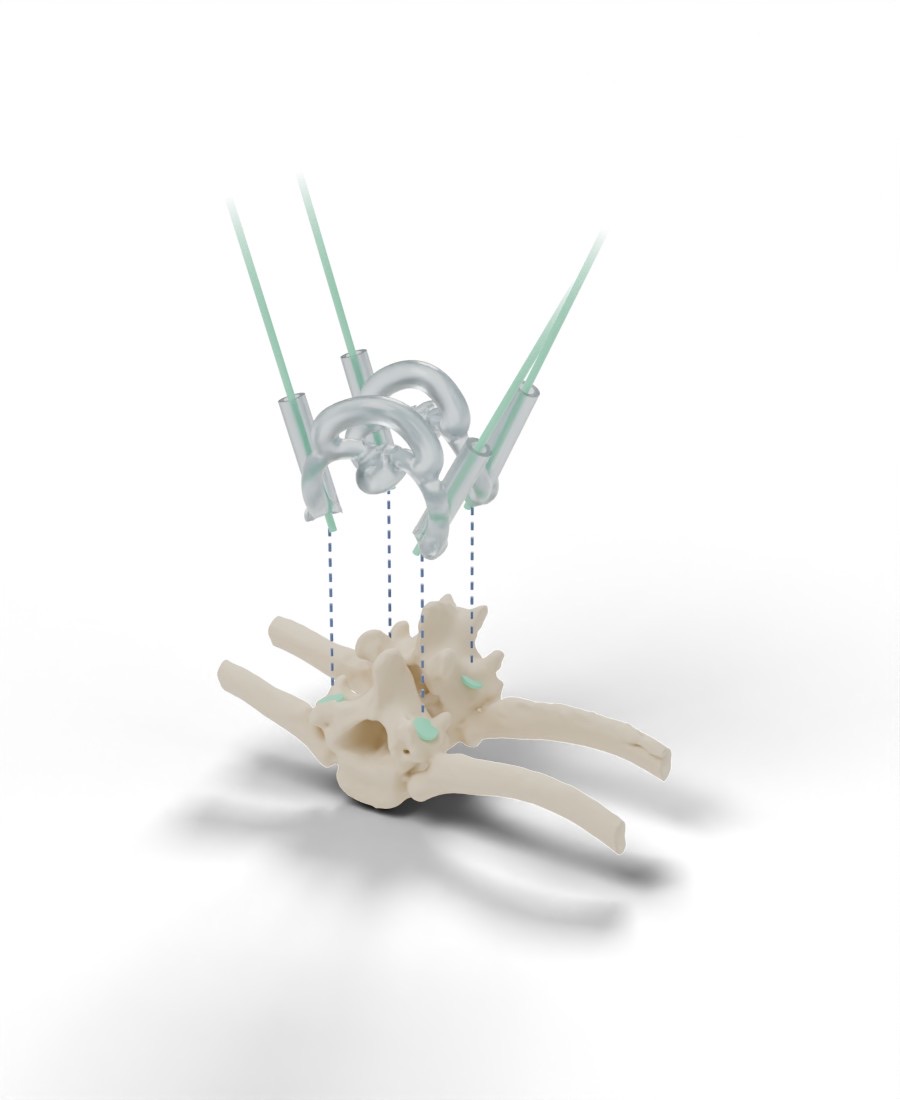
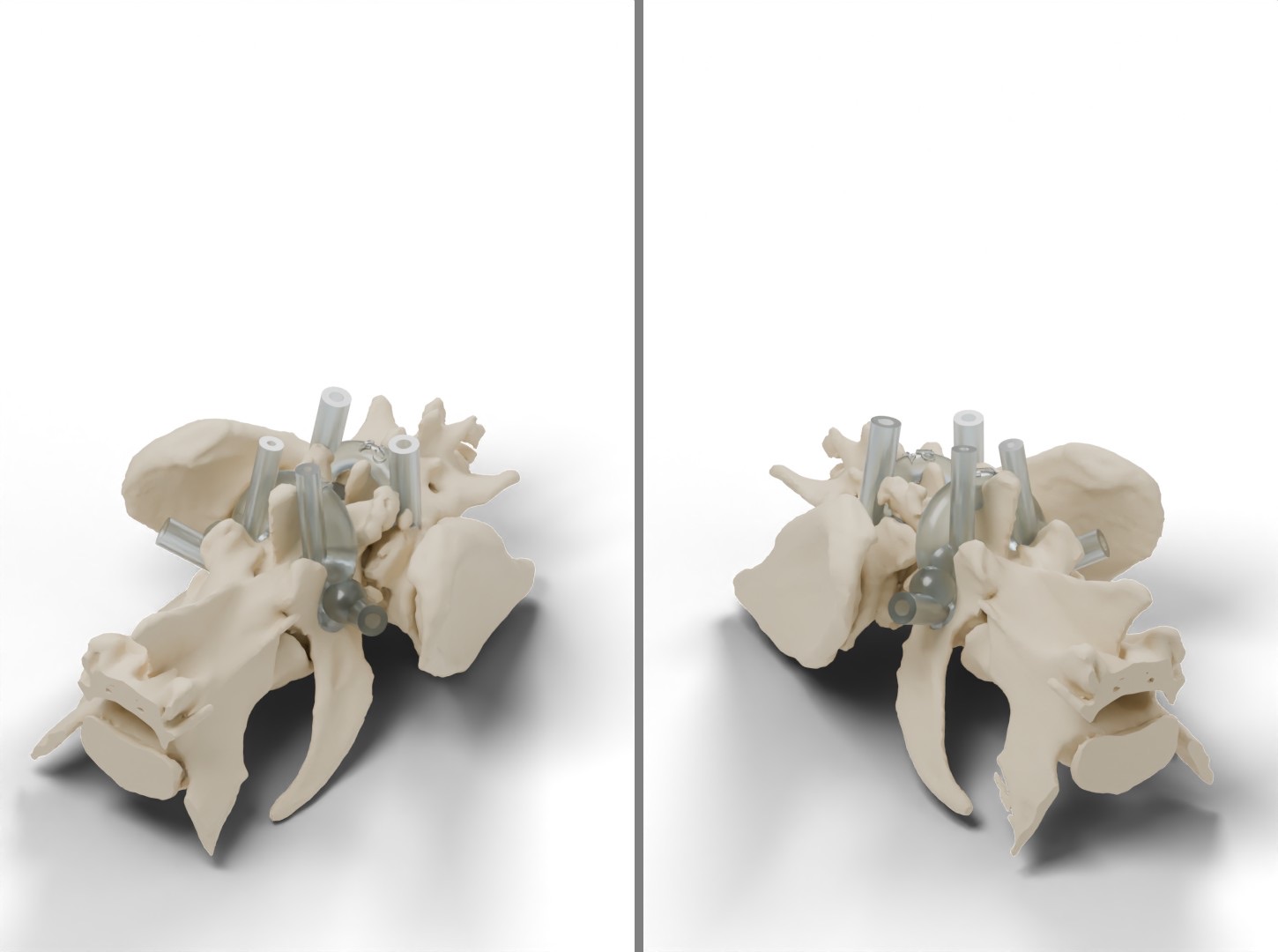
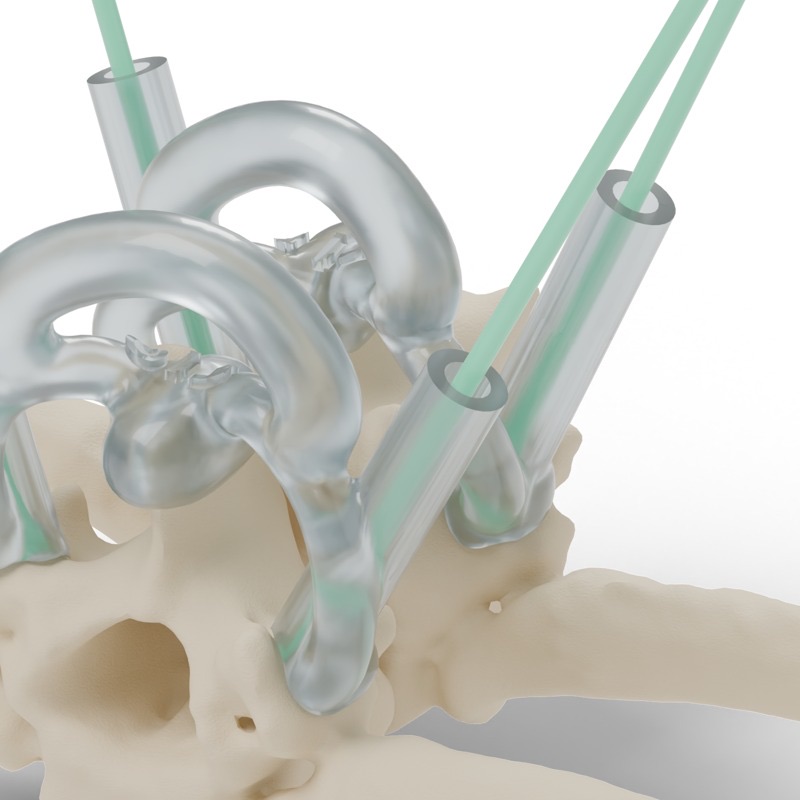
Patient-specific pedicle screw guides
Planned on the patient's CT
Screw entry points, angles and lengths are set on the 3D model of the patient's own vertebrae.
One sleeve per trajectory
Each drill sleeve carries one planned trajectory. The guide body is shaped to the patient's vertebral surface.
Cervical to lumbosacral
Guides are designed for cervical, thoracolumbar and lumbosacral segments.
What the parts are made of
Implants
- Produced from Ti6Al4V titanium alloy by Additive Manufacturing.
- Porous lattice regions can be built into the implant design.
- Designs can accept locking screws.
Surgical guides
- Printed in a biocompatible guide resin.
- Autoclavable.
Three disciplines, one case
Manufacturing engineering
Additive Manufacturing, materials knowledge and process control.
Medical device discipline
Experience with human orthopaedic implants, quality systems and biocompatibility evidence.
Clinical surgery
The view of veterinary orthopaedic surgeons who operate in the field.
Have a case? Send us the CT.
Upload the DICOM series and tell us about the patient. A Vimics engineer reviews the data and replies by email.
 vimics.vet/dicom